01
Gallery · Energy
Energy & Industrial Excellence
03 Exhibits
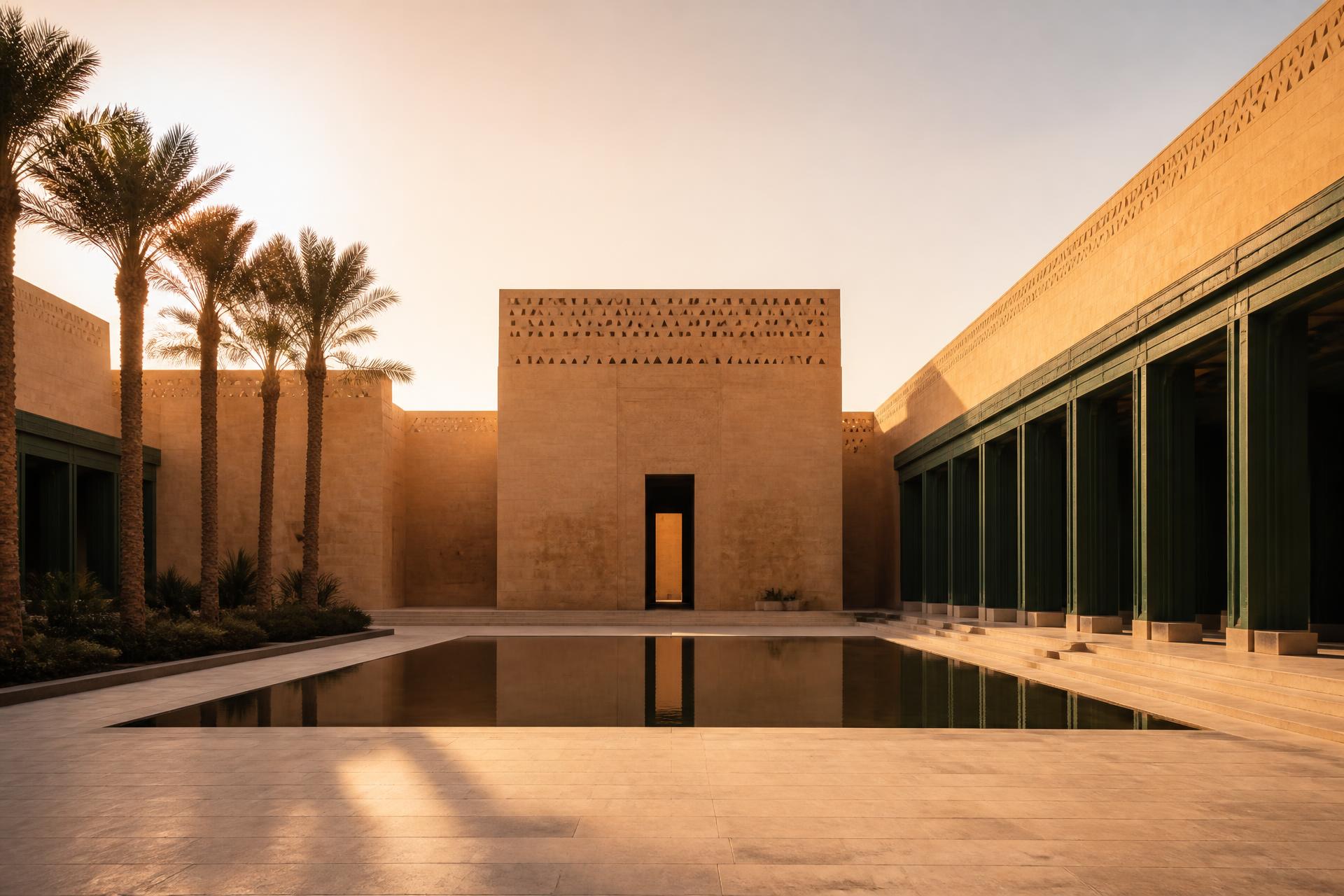
A digital exhibition on how branding, consumer psychology and strategic marketing can carry Saudi products into the world’s most competitive markets — and keep them there.
معرضٌ رقمي يحتفي بالعلامات السعودية وقدرتها على المنافسة في الأسواق العالمية.

Riyadh · Diriyah · AlUla
The answer is not a louder voice. It is a more confident one — built on craftsmanship, research, and a clear sense of identity. The galleries ahead are arranged as a single narrative, beginning with the forces that shape global preference and ending with the quiet, evidence-based moves that can shape a new generation of Saudi brands.
Many Saudi products already match — and in some categories already surpass — the quality of their international competitors. The gap is not in the formulation. It is in the visibility, the storytelling, and the relationship.
Global brands have repeated the same promise, in the same voice, across the same touchpoints for fifty years or more. Familiarity becomes a form of quality.
A recognised name lowers the perceived risk of a purchase. Consumers reach for what they already trust — often before comparing the alternatives.
Packaging, advertising, distribution, customer service. Every touchpoint has been refined. The product is only one chapter of a much longer book.
of purchase decision-making is estimated to happen subconsciously, below deliberate reasoning.
Gerald Zaltman, How Customers Think, Harvard Business School Press, 2003
of consumers say they trust most of the brands they buy.
Edelman Trust Barometer Special Report: In Brands We Trust?, 2019
exposures may be enough for an advertisement to do its work, per the classic study on effective frequency.
Herbert E. Krugman, “Why Three Exposures May Be Enough”, Journal of Advertising Research 12(6), 1972
Recent research on Saudi consumers reveals a clear pattern. Beyond price and product, four forces shape the decision to buy — and the decision to return. The findings below are not abstract. They translate directly into operating principles for any brand built in the Kingdom.
Across halal purchase-intention research, religiosity recurs as a significant factor alongside attitude and cultural values. In practice it reads as integrity: honesty, transparency, ethical sourcing and responsible business — communicated by behaviour, not by slogan.
Brands that understand local traditions, family rhythms, hospitality and national identity build stronger emotional connection than brands that translate international campaigns verbatim.
Arabic is not a translation layer. CSA Research found that 76% of consumers prefer to buy products with information in their own language — when Arabic becomes the native voice of the brand, comprehension and preference move together.
Long-lived brands consistently meet or exceed expectation. Quality perception is a leading long-term driver of preference, repurchase and recommendation.
Each stage in the journey is a separate piece of work. A brand that masters one and neglects the next loses the customer somewhere between them. The exhibit below traces the full arc from a first glance to an unprompted recommendation.
The brand enters the consumer's field of view.
Visual identity becomes familiar across touchpoints.
Story, craft and value proposition begin to resonate.
Honest behaviour and consistent quality earn credibility.
The first transaction — a small leap of faith.
The product delivers, or exceeds, the implied promise.
Repurchase becomes habit, attachment becomes preference.
The customer becomes the brand's most credible voice.
Country of origin operates as a quiet pre-judgement. Each nation carries a perceptual signature, built over generations. Saudi Arabia's signature is still being written — and the manufacturers active today are its authors.
Source: Made-in-Country-Index (MICI) 2017, Statista in cooperation with Dalia Research — 43,034 respondents in 52 countries. Saudi Arabia does not appear in the published ranking; its perception is measured here by absence, not by a score.
Hall IV · Annex — Saudi Arabia’s own signature
Culture · Heritage · Contemporary design
Every other country on this chart earned its signature by making one thing legible to the world: engineering, precision, fashion, technology, luxury. Saudi Arabia does not need to borrow one of those. Its unclaimed position is the one no other manufacturing nation can occupy — a living culture translated into contemporary products.
Made in Saudi can communicate more than where a product was manufactured. It can become a way for Saudi brands to carry local identity, heritage and contemporary creativity into global markets.
Craft
The geometric wall painting of Asir, historically made by women, now reappearing as pattern systems in packaging, interiors and product graphics.
UNESCO Representative List of the Intangible Cultural Heritage of Humanity, 2017
Material
Desert loom weaving in wool and camel hair — a colour and stripe language that reads instantly as Arabian without a single literal symbol.
UNESCO Representative List, inscribed 2020 (Saudi Arabia and Kuwait)
Letterform
From manuscript scripts to contemporary type design: the strongest bilingual Saudi brands treat Arabic as the primary letterform, not a translation of the Latin one.
UNESCO Representative List, 2021 — multinational file submitted with Saudi Arabia
Terroir
Centuries-old coffee cultivation in Jazan, now a named origin — the same mechanism that turned regions in Italy and France into premium categories.
UNESCO Representative List, 2022
Architecture
The mud-brick logic of Najd — thick walls, deep shade, triangular apertures — restated as a contemporary architectural language across Riyadh and Diriyah.
Royal Commission for Riyadh City / Diriyah Company published design principles
Table
Dates, coffee, spice routes and regional cooking from Hijaz to Najd to Jazan — a product category where provenance already carries value abroad.
Saudi Culinary Arts Commission; Year of Saudi Coffee, 2022
The claim is not that a product is good because it is Saudi. It is that Saudi identity — its crafts, materials, letterforms, regions and hospitality — can become part of the value a product carries into the world.
Exhibition note
Saudi manufacturing quality is no longer the open question. What remains to be built is the visibility, packaging, distribution and relationship that competitors have accumulated over decades — the country’s largest open opportunity.
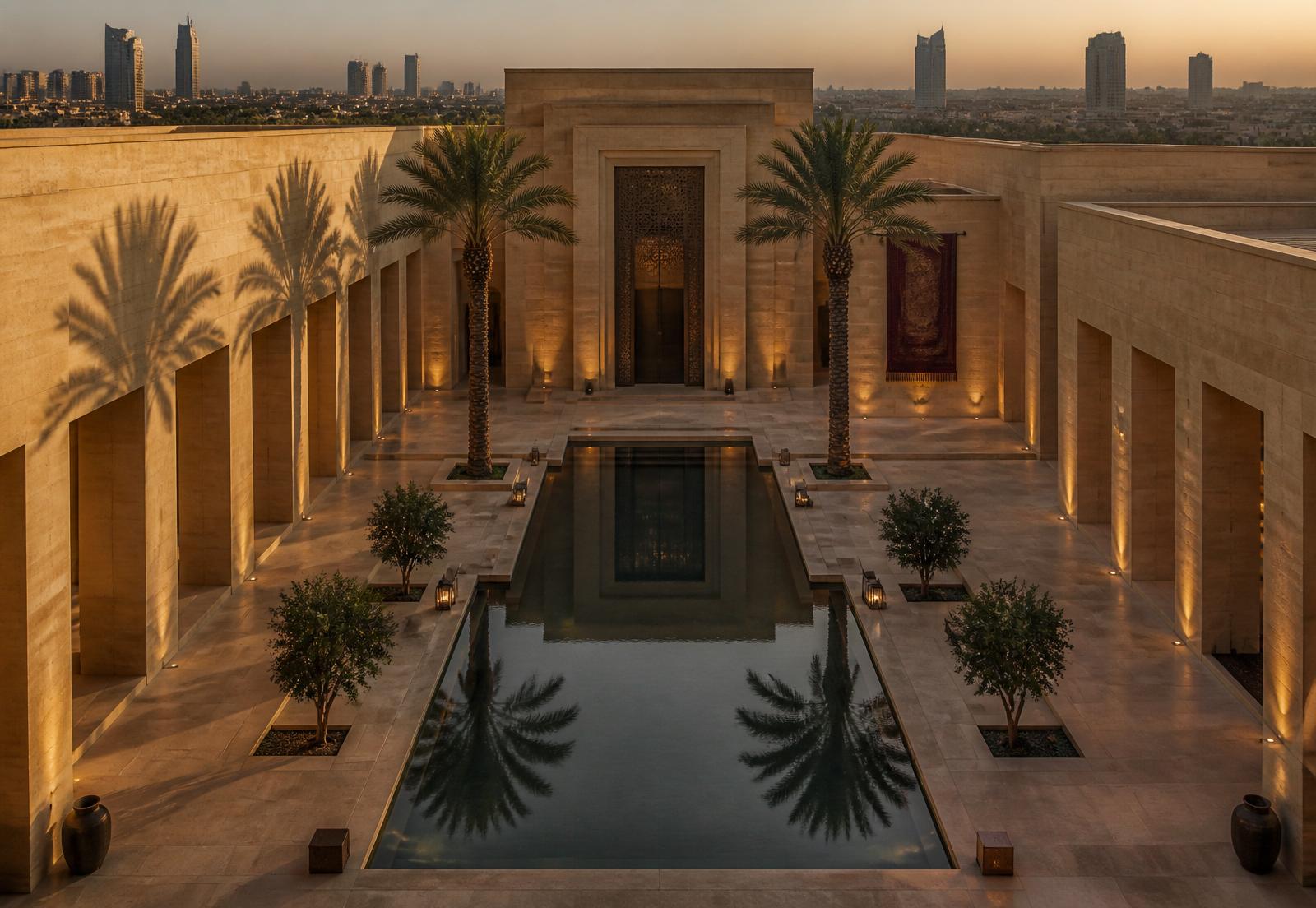
Every Saudi product that earns preference contributes to diversification, manufacturing depth, employment, entrepreneurship and export growth. The Made in Saudi Program exists to make that contribution visible — to gather the country's makers under a single mark of provenance, and to introduce them, properly, to the world.
Marketing earns attention. Trust keeps it. Each stage feeds the next — and the last returns to the first. Scroll to walk the loop.
Develop memorable visual systems that remain consistent across every touchpoint — from packaging to retail, from advertising to receipt.
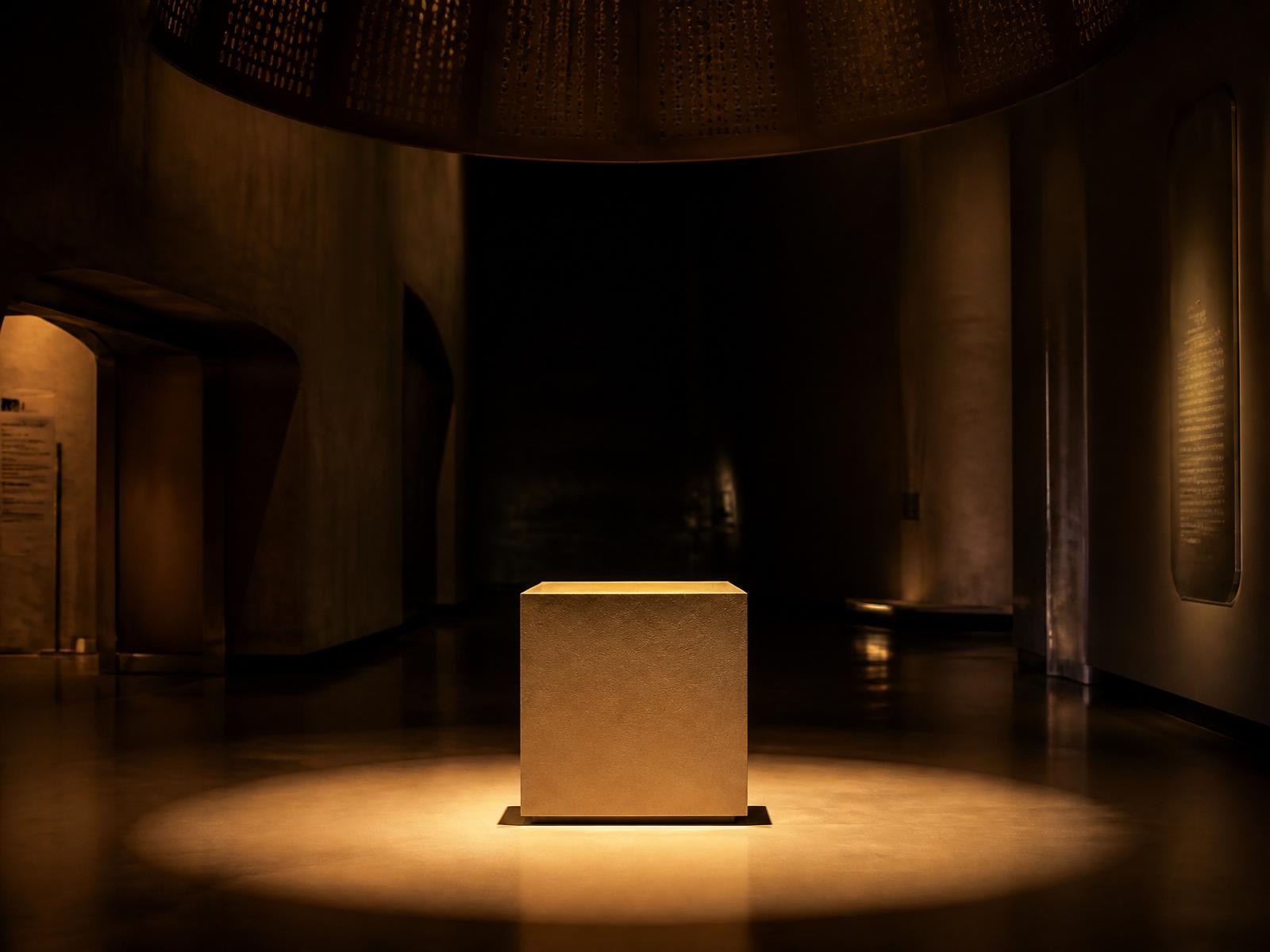
A walk through 7 categories and 21 of Saudi Arabia's most respected brands. Each carries the Made in Saudi mark — quiet, embossed, unmistakable.
Where a widely repeated marketing statistic could not be traced to a primary source, it has been removed rather than reworded. Claims that remain unverified are not shown.
The future of global brands may already be taking shape in Saudi Arabia. Through innovation, strategic branding, consumer understanding and a commitment to excellence, products proudly carrying the Made in Saudi mark can become symbols of quality, trust and national achievement — earning recognition not only across the Kingdom, but around the world.